
Research opportunities

Cerebral Palsy – Hōkai Nikurangi is an exciting area of research, science, and clinical practice. Discoveries are being made all the time particularly when it comes to specific areas of living with CP, such as the difference between Level I and V.
The Cerebral Palsy Society regularly gets approached with research opportunities. This page is a place to learn about different studies that are on offer.
By getting involved in research, you’re helping create a more informed and clearer picture for people with CP across Aotearoa New Zealand, guiding advocacy and efforts towards change.
- If you are interested in learning more about the studies listed below, please contact the researcher directly.
- If you would like information about CP research in general, please contact Cerebral Palsy Society Researcher and Writer Amy Hogan amy@cpsociety.org.nz.
- Anyone interested in having their research featured on this page should contact Cerebral Palsy Society Researcher and Writer Amy Hogan amy@cpsociety.org.nz. Please supply an intro of no more than 200 words, a video or written document explaining your research, a suitable photo (or logos), and any other relevant documents.
Share Your Story | Research Participants Wanted
October 20, 2026
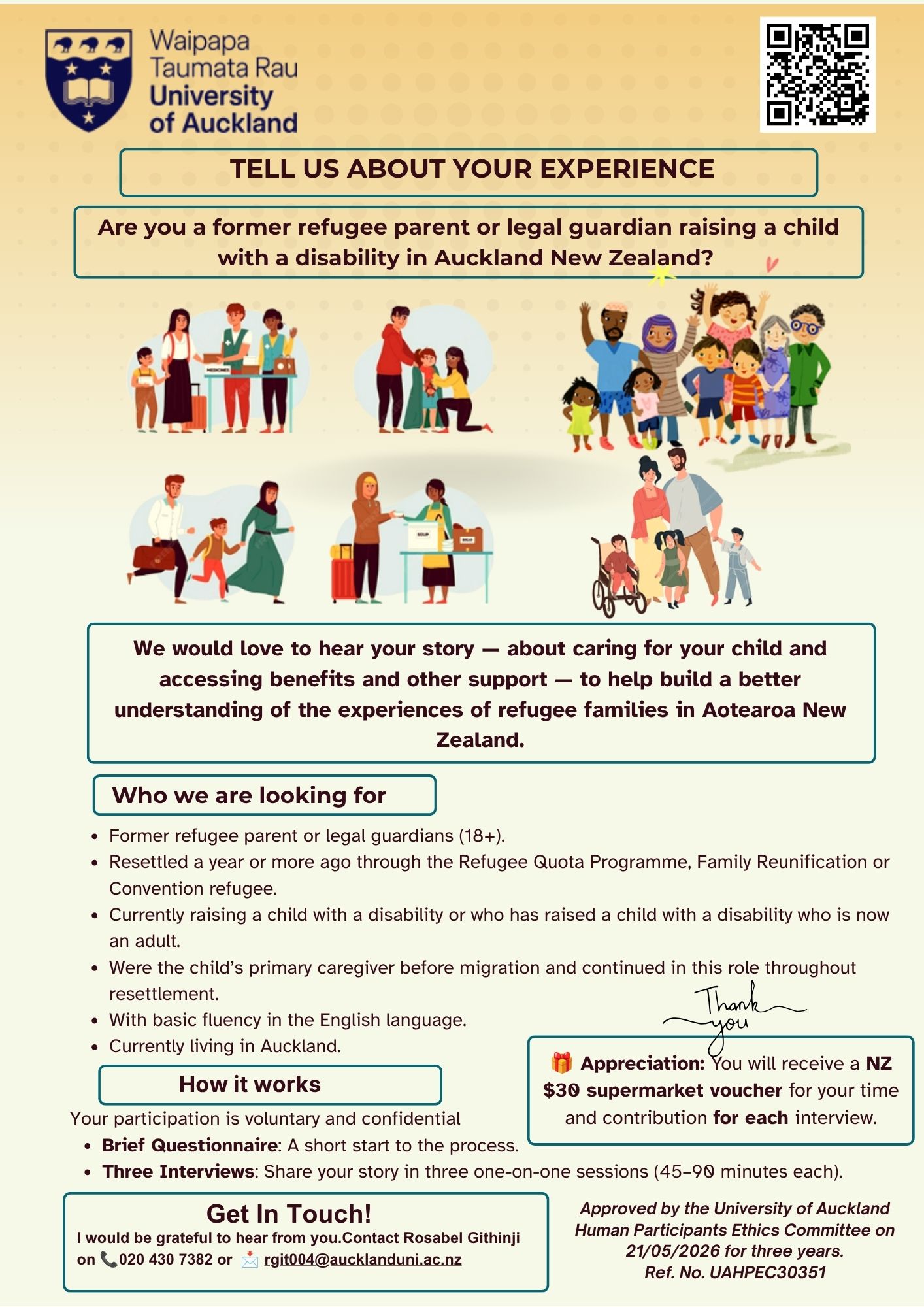
Are you a parent or legal guardian from a refugee background who is raising or has raised a child with a disability in Auckland?
A University of Auckland research study is seeking parents or legal guardians from refugee backgrounds who are raising, or have raised, a child with a disability in Auckland, New Zealand.
The aim of this study is to understand families’ experiences of caring for their child and accessing benefits, services and other forms of support.
Participation involves three interviews, which will be arranged at different times and locations convenient for you. Participants will receive an NZ$30 supermarket voucher for each interview as a contribution for their time and participation.
Participation is entirely voluntary. Any information shared will be kept confidential.
Parents and legal guardians who would like more information are welcome to contact Rosabel Githinji at rgit004@aucklanduni.ac.nz or on 020 430 7382.
Your experience can help build an understanding of how refugee-background families raising children with disabilities navigate support systems in Aotearoa New Zealand.
Global Survey on Physical Disability, Sport Access and Well-Being
October 19, 2026
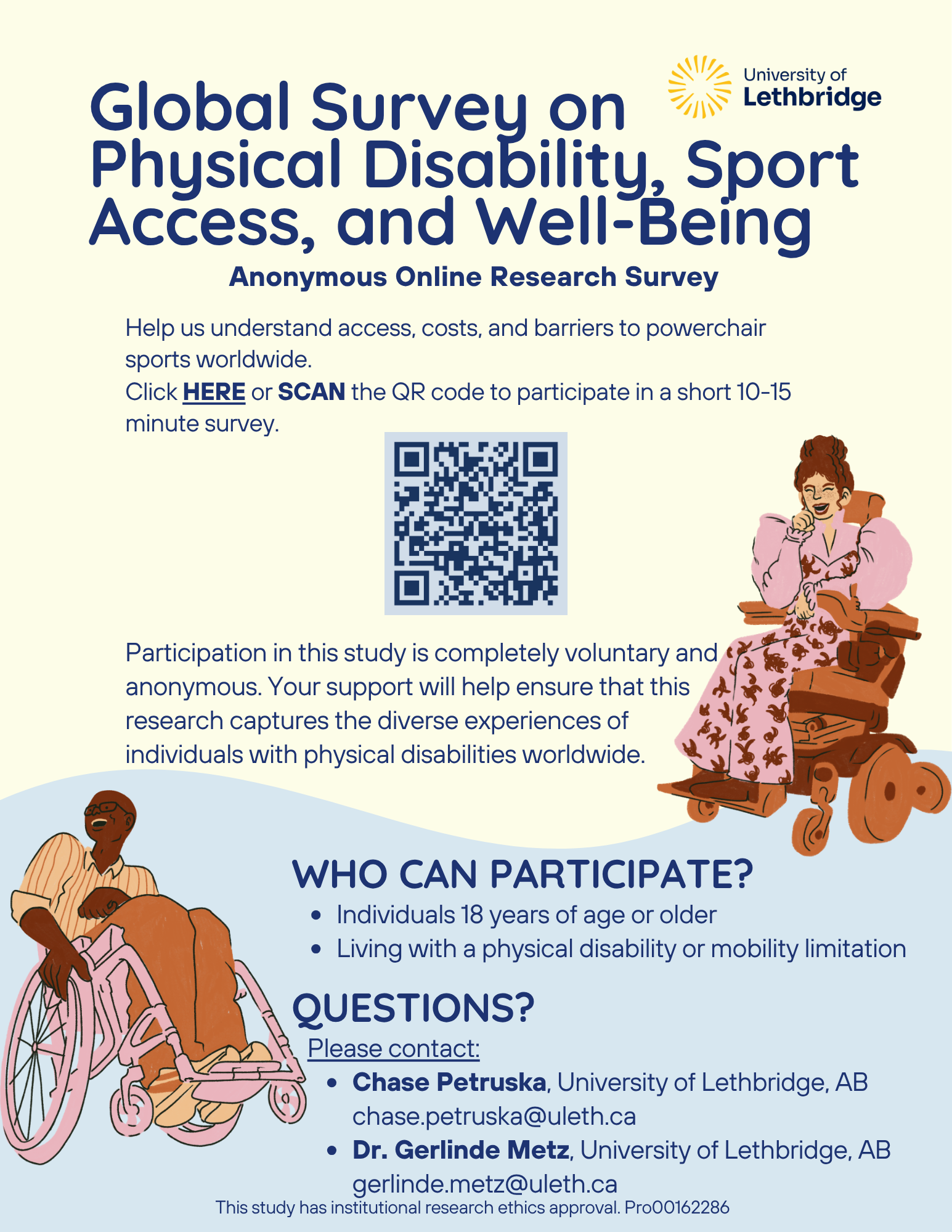
Researchers at the University of Lethbridge in Canada are conducting an international research study examining global access to powerchair sports.
As a part of this study, they are seeking survey responses from adults with physical disabilities who do not currently participate in powerchair sports and those who do.
This study uses a single survey link. Participants are asked whether they are completing the survey as a current powerchair sport participant, a non-participant with a physical disability, or an organisation representative. Based on their response, participants are automatically directed to the appropriate questionnaire.
Eligible participants for the non-powerchair sport participant questionnaire must be:
- 18 years of age or older
- Living with a physical disability or mobility limitation
Participation in this study is completely voluntary and anonymous. No identifying information will be collected, and responses will be reported only in aggregate. The survey takes approximately 10 to 15 minutes to complete.
Your support will help ensure that this research reflects the true breadth of experiences and challenges within the physical disability community globally.

Sequencing to improve the understanding of the genetics of Cerebral Palsy
October 19, 2026
People living with Cerebral Palsy (CP) and their whānau are invited to take part in a study that looks at DNA sequencing to improve our understanding of the genetics of CP in Aotearoa | New Zealand. There is an emerging understanding that genetic factors contribute to some cases of cerebral palsy.
Genes are pieces of DNA that contain the instructions for how your body works. Every cell in your body contains thousands of these genes. “Whole genome sequencing” lets us look at all your genes at the same time. This means it is a fast way to search for potential genetic changes that can cause health problems.
Lead: Professor Justin O’Sullivan, Director, Liggins Institute
Study site: Liggins Institute, University of Auckland (in collaboration with Te Toka Tumai | Starship Children’s and Auckland City Hospital and the NZ Cerebral Palsy Register).
Remote recruitment may be available in the future if you unable to attend the Liggins Institute – please express your interest.
Who is the project for?
- Children or adults living with CP
- Genetic testing has not yet identified a cause for your CP
What does it involve?
- Meet with a genetic counsellor who will explain the study to you, ask you some simple questions, and obtain your consent to be part of the study. Your information will be reviewed by the project team to confirm the study is right for you.
- If you are eligible, you will be asked to:
- Consent to be registered on the New Zealand Cerebral Palsy Register and provide access to your/your child’s past medical history
- Have blood/saliva samples collected for whole genome sequencing
- Attend a follow up visit to discuss the results of your test.
For more information about this study contact the research team: cpgenes@auckland.ac.nz or 027 280 7318.
Ethics committee reference: 2025 FULL 24103
More information about genetics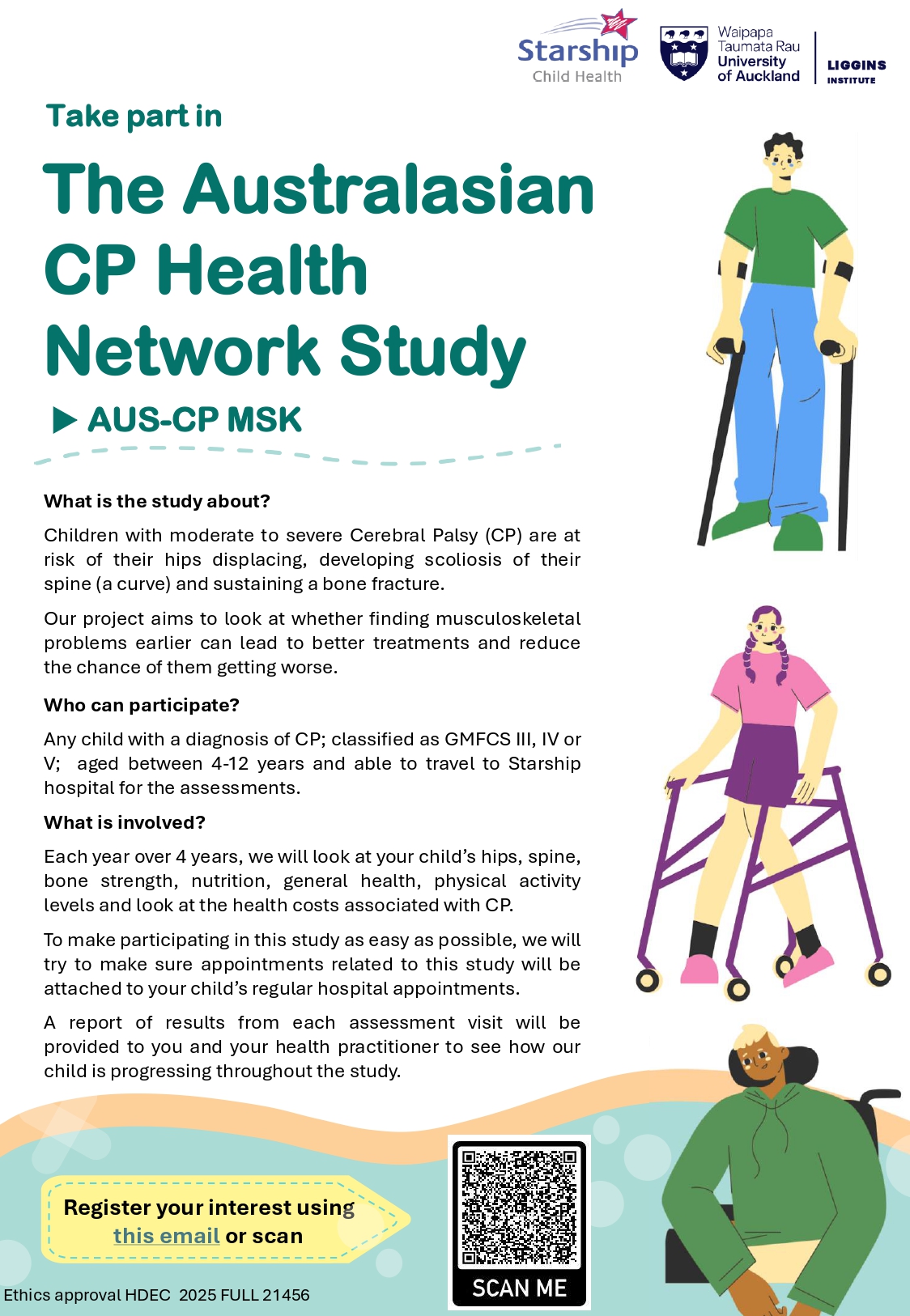
The Australasian CP Health Network Study
August 10, 2026
Children and whānau in the Auckland region are invited to take part in a study that looks at muscle and bone health in children living with Cerebral Palsy (CP) – Hōkai Nukurangi.
Title: The Australasian Cerebral Palsy Musculoskeletal Health Network
Lead: Professor Ngaire Susan Stott and Professor Paul Hoffman
Study site: Starship Children’s Hospital; Liggins Institute University of Auckland
This study is part of a multi-center study with Australia. Other sites involved include Children’s Health Queensland, Sydney Children’s Hospital Network and Royal Children’s Hospital Melbourne. Researchers are looking to expand to other New Zealand sites later in 2026.
The project aims to collect health information about children to find out whether identifying musculoskeletal problems earlier can lead to more timely treatments and reduce the chance of these problems getting worse.
Who is the project for?
- Children
- Aged 4- 12 years
- Living with CP
- Gross Motor Function Classification System (GMFCS) III, IV or V
What does it involve?
- Four annual visits to Starship hospital to look at your child’s hips, spine, bone strength/density, nutrition and general health associated with CP.
- Read the Participant Information Sheet for full details
- Or email the research team for more information – msk.study@auckland.ac.nz
Ethics committee reference: 2025 FULL 21456
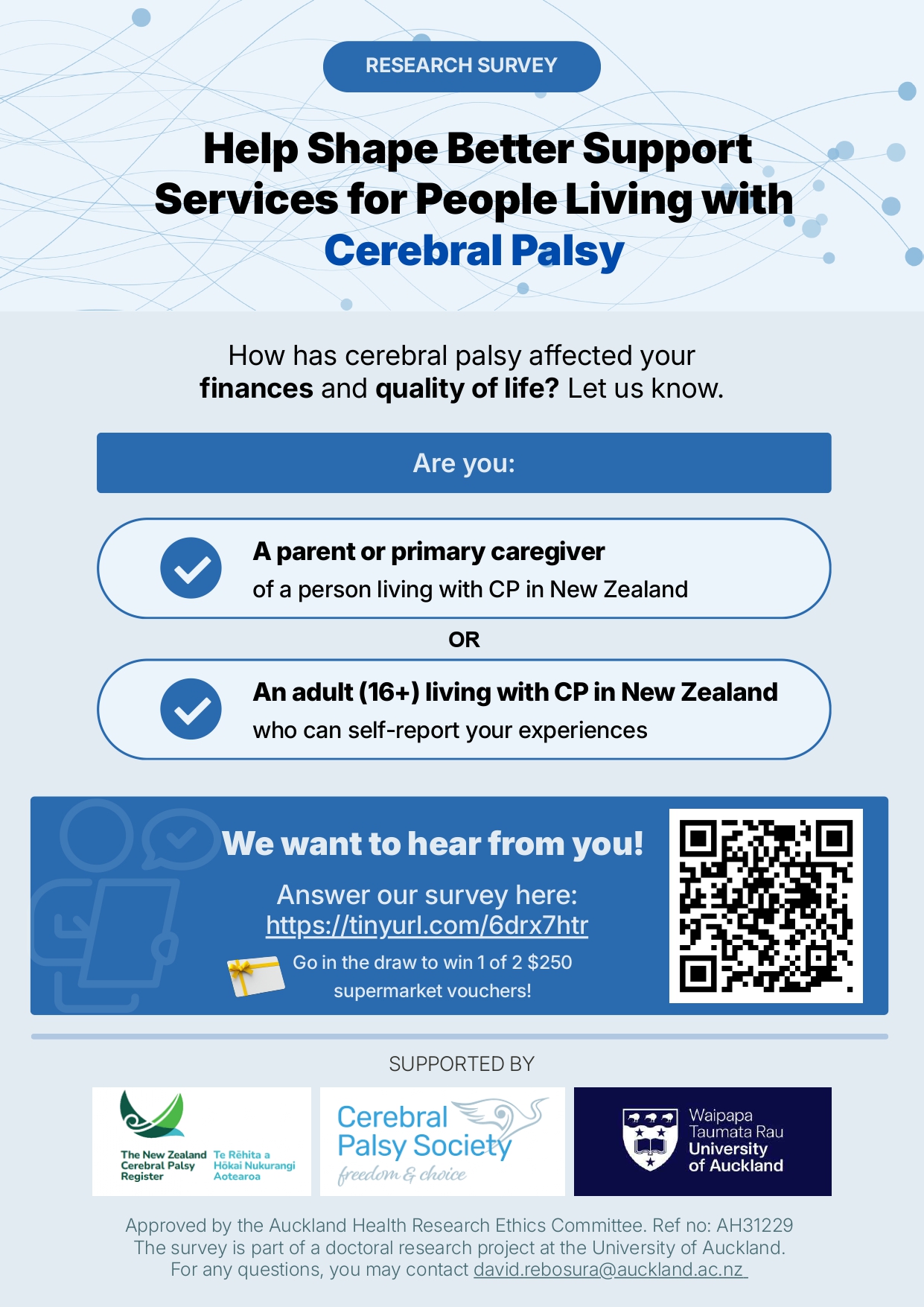
How has CP affected your finances and quality of life?
July 31, 2026
An Auckland University research project wants to know your thoughts and experiences about the cost of living with CP in Aotearoa.
As a thank you for completing their survey you can go in the draw to win one of two $250 grocery vouchers.
The survey is part of a doctoral research project, being run in conjunction with the Cerebral Palsy Society and the New Zealand Cerebral Palsy Register. It aims to understand the financial and economic impact of Cerebral Palsy on individuals and caregivers.
We encourage you to complete the 30-to-75-minute survey – the information it produces will be very valuable to the Society as well as the researchers leading the study.
The survey will take you through questions on out-of-pocket expenses, productivity, and quality of life.
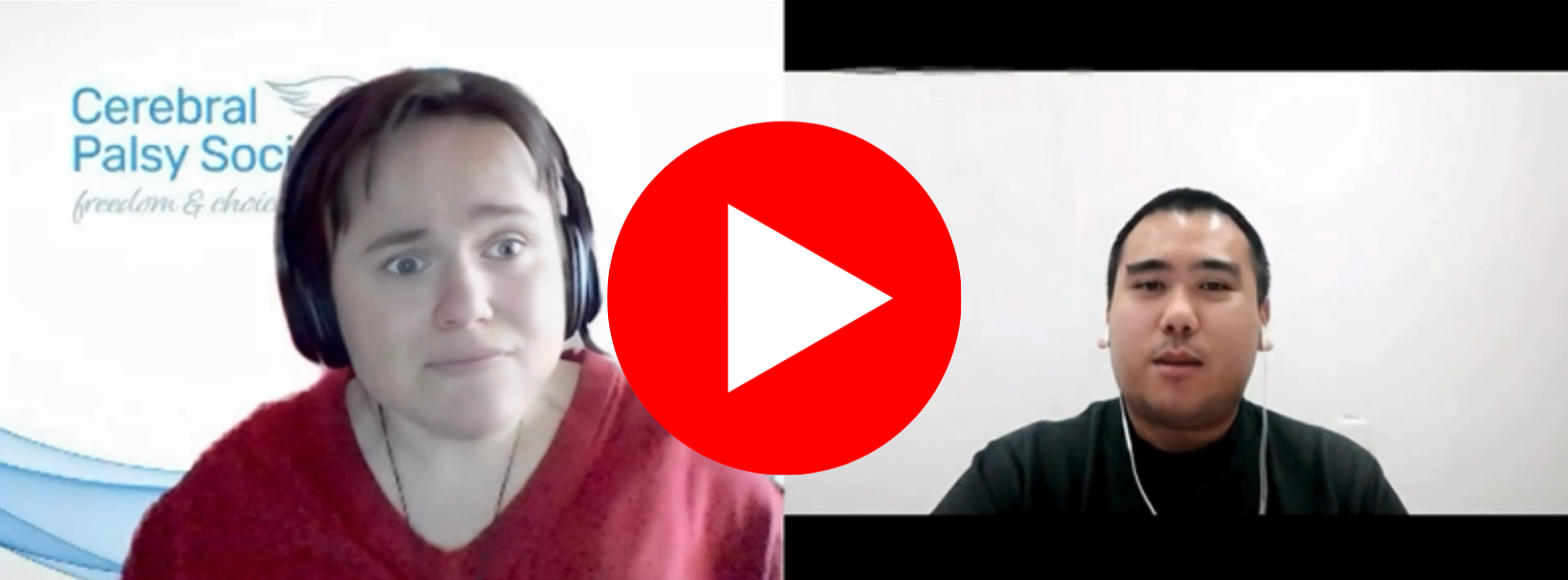
In the video below, University of Auckland investigator David Rebosura and CP Society’s Researcher and Member Support Advisor Amy Hogan chat about the importance of the survey.
The survey closes September 30.
Complete the survey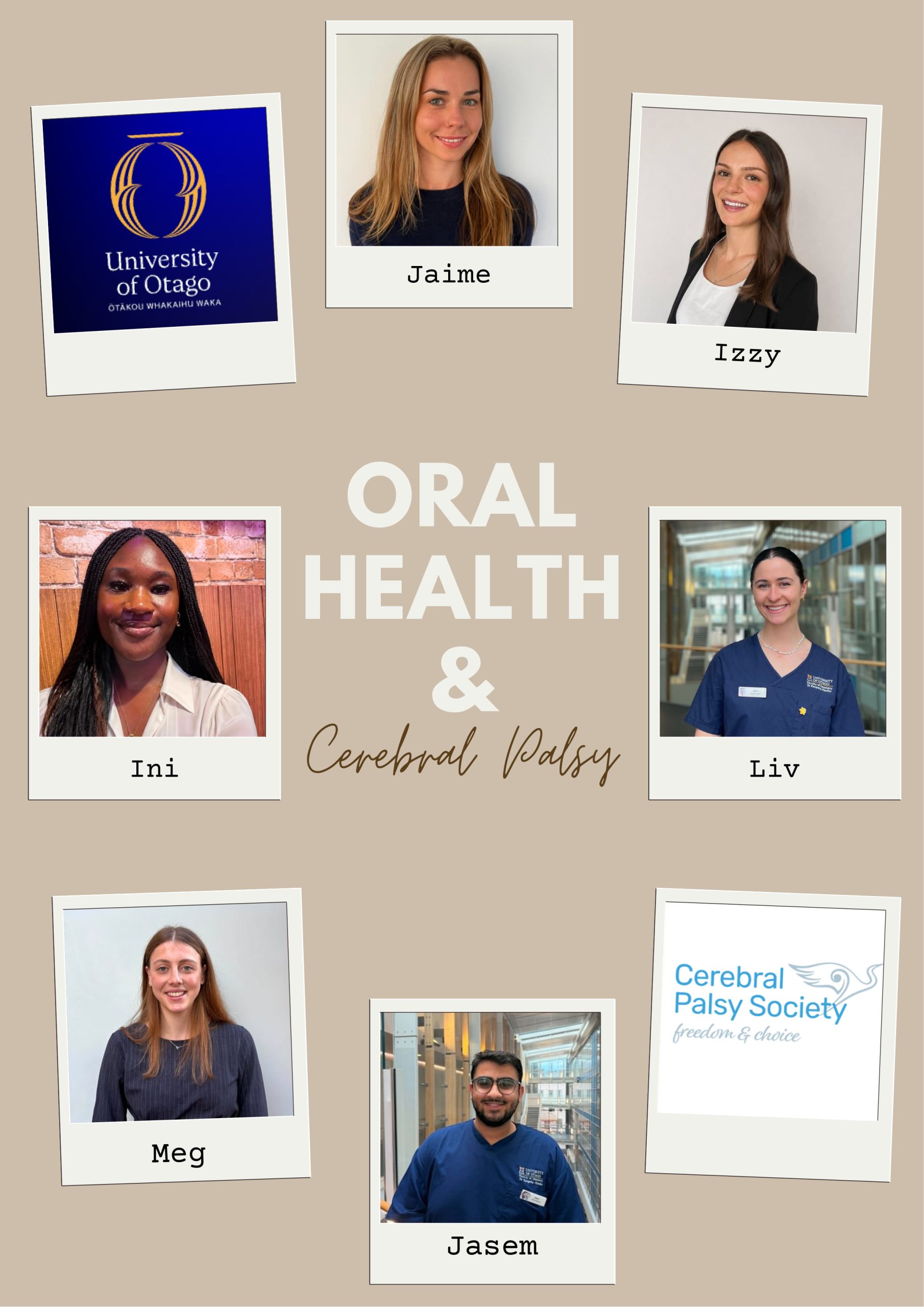
Oral health tips for people with cerebral palsy
July 9, 2026
“We are Jaime, Liv, Ini, Meg, Izzy, and Jasem, a group of fifth and final-year students studying towards a Bachelor of Dental Surgery at the University of Otago Auckland Dental Clinic. As part of our curriculum, we were tasked with developing an educational resource that aims to help address oral health inequities within a population group in Aotearoa New Zealand. We chose to focus on individuals with cerebral palsy.”
The students have created a questionnaire to see what people who support someone with cerebral palsy already know about oral health and what their current practices are. They’d like people to fill in the questionnaire before checking their other resources (the podcast and PDF below).

“Through extensive research, discussions with caregivers and healthcare professionals, and our own clinical knowledge, we developed an easy-to-read PDF resource to support caregivers and others involved in the care of individuals with cerebral palsy.”

“Recognising that many caregivers have busy schedules, we also created a podcast with an accompanying video, allowing people to either listen on the go or sit down and watch at a time that suits them. Our goal was to create resources that are practical, accessible, and evidence-based, helping to improve oral health knowledge and support for individuals living with cerebral palsy.”

The students are keen to hear from any families or caregivers who would be interested in meeting over Zoom to discuss the resources.
“We’re hoping to gather more detailed feedback and opinions in addition to the survey that will accompany the resource.”
Email Jaime Hanrahan on jaimehanrahan2@gmail.com or Ini Falope ini.falope04@gmail.com for more information.
- Amy Hogan, Cerebral Palsy Society of NZ
- Dr Karen Lansdown, School of Acute and Primary Health, Senior Lecturer Oral Health, Auckland University of Technology
- NZ CP Register, Starship Children’s Health
for their feedback on the development of this material.
Free gait training sessions
October 13, 2025 – updated December 12, 2025
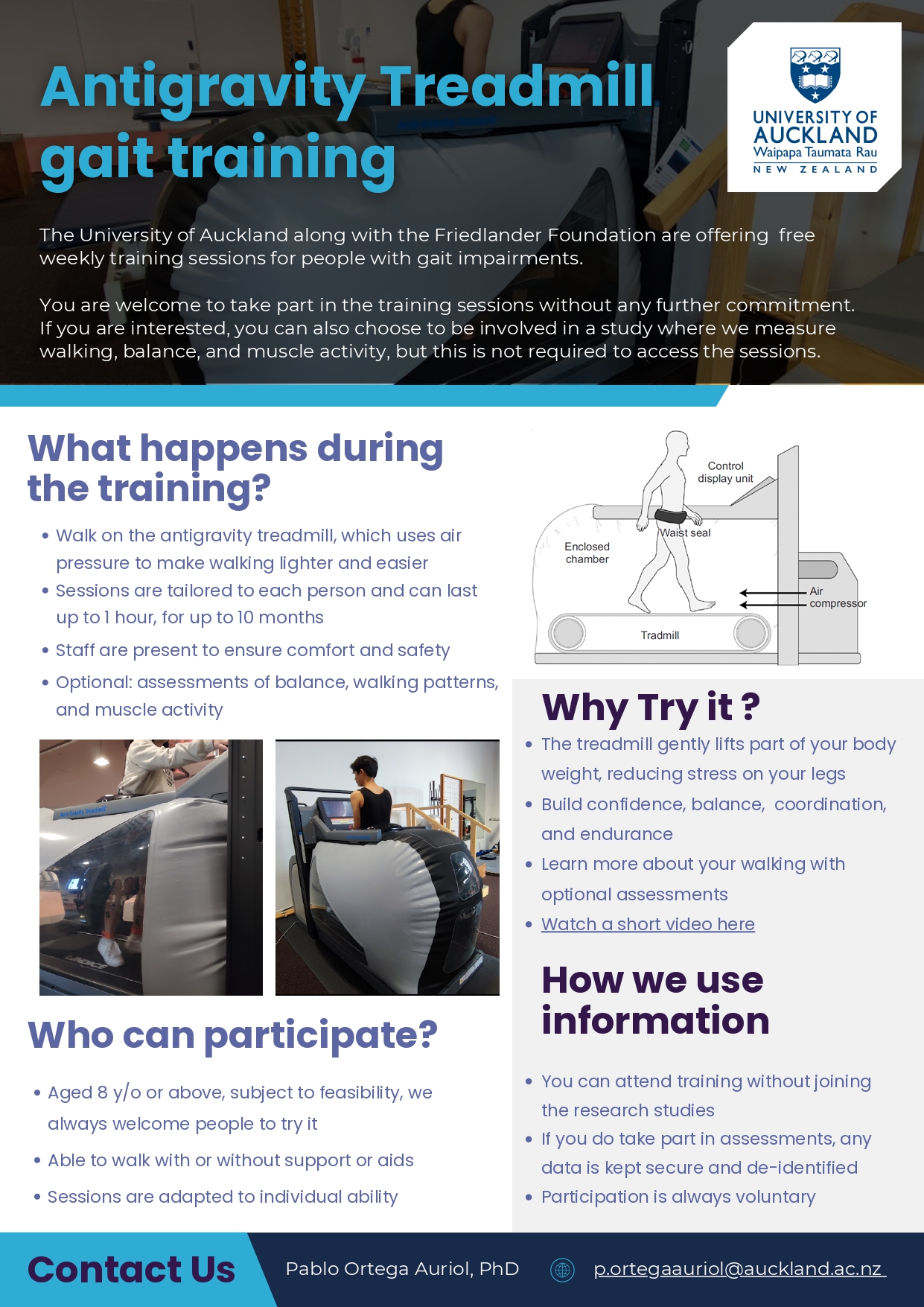
Researchers at the Auckland Bioengineering Institute have concluded the first research phase of their anti-gravity treadmill project. Given the great progress some participants achieved, they have expanded their scope to offer the training free of charge to the community. Weekly sessions run at the Newmarket campus between 9am and 5:30pm. There are spaces for more participants.
The positive-pressure (“anti-gravity”) treadmill reduces body weight loading and makes walking easier and more efficient. The researchers see this as a complementary form of physical activity alongside existing therapy or exercise routines.
Watch this video to see how the treadmill works: https://youtu.be/R5vkpDBzIyk?si=7tfP4twIZkd_E_SR
For more information contact Pablo Ortega-Auriol, Research Fellow, Auckland Bioengineering Institute – p.ortegaauriol@auckland.ac.nz
* Clinicians who would like to visit and learn more about the sessions and services for their patients are more than welcome to get in touch.
More informationJoin Our Online Community
It’s an important time to be connected. Connecting with your community is an incredibly powerful way to beat isolation at this time.
Join our online community today where you can speak with CPS staff, and other families around New Zealand who either have, or know someone living with Cerebral Palsy.
Visit our FacebookRequest A Call From Our Team
We’re here to help. If you’re feeling isolated or need support, our team is available to talk. Sometimes, having someone to chat with can make a huge difference during this time of isolation.
Why not request a call or email from the team today?
Request a call